GEOTECHNICAL ENGINEERING
IRVING
HomeInvestigationSPT (Standard Penetration Test)

SPT Soil Boring in Irving, Texas — N‑Value Testing per ASTM D1586

Site investigations you can build on.

LEARN MORE

Too many foundation bids in Irving still go forward with nothing more than a hand auger look at the top two feet. That gamble unravels fast when the boring hits a loose sand lens at 15 feet or a slickensided clay seam that swells 4 percent under load. We run the SPT hammer per ASTM D1586 because the Eagle Ford Shale and Trinity River terrace deposits that underlie the 75060 corridor and Las Colinas don’t read textbooks—they vary foot by foot. A 140‑pound safety hammer driving a split spoon every 2.5 feet gives us the N‑value profile that the structural engineer actually needs for bearing capacity, settlement estimates, and liquefaction screening under IBC Chapter 18. Where subsurface drainage is suspect, we pair the SPT log with an in‑situ permeability test to flag perched water before the excavator breaks ground.

Split‑spoon refusal at 50 blows says as much about the formation as 6 inches of sample recovery does—both numbers go straight into the bearing capacity calculation.
Our service areas

Process and scope

Irving sits on a patchwork of stiff residual clays, alluvial silts, and relic channel sands that the West Fork of the Trinity left behind. Plasticity indices above 30 are common in the upper 10 feet, and seasonal moisture swings can move a lightly loaded slab an inch vertically between August and December. The SPT boring captures that variability in a single log: blow counts in fat clay often read 6 to 12, while the underlying sand stringers can jump past 30 blows per foot. We record sample recovery, moisture condition, and the presence of calcareous nodules or ironstone gravel that can mislead an inexperienced driller. Every boring is logged by a Texas‑licensed engineering geologist and plotted in real time against the city’s GIS soil survey data, so the final report correlates field N‑values with laboratory index tests and delivers net allowable bearing pressures ready for the foundation permit set.
SPT Soil Boring in Irving, Texas — N‑Value Testing per ASTM D1586
Technical reference — Irving

Site-specific factors

A mixed‑use project in the Heritage Crossing district taught us what happens when the SPT is stopped too shallow. The first 20 feet logged medium‑stiff clay with N‑values around 9, so the design team assumed a competent bearing stratum. We extended the boring to 45 feet and hit a 10‑foot‑thick loose sand layer with N‑values of 5 that saturated during a wet spring, triggering a 2‑inch differential settlement across the east parking deck. The fix required over‑excavation, aggregate piers, and four months of delay that could have been avoided with a deeper SPT profile. In Irving’s alluvial sequence, sand layers can be clean, rounded, and poorly graded—exactly the material that loses strength when saturated. A full SPT log to at least twice the footing width catches those lenses early, keeps the structural loads where they belong, and satisfies the special inspection requirements Dallas County enforces under the current IBC.

Need a geotechnical assessment?

Reply within 24h.

Email: [email protected]

Watch the video

Reference standards

ASTM D1586 — Standard Test Method for SPT and Split‑Barrel Sampling of Soils, ASTM D2487 — Classification of Soils for Engineering Purposes (Unified Soil Classification System), IBC Chapter 18 — Soils and Foundations (2021 edition, adopted by City of Irving), ASCE 7‑22 — Minimum Design Loads, Section 3.2 — Site Classification from SPT N‑values

Technical parameters

ParameterTypical value
Hammer typeSafety hammer, 140 lb, 30 in. drop per ASTM D1586
SamplerStandard 2 in. OD split spoon with check valve
Sampling intervalEvery 2.5 ft continuous or at stratum change
N‑value correctionN60 and N1,60 per Seed & Idriss energy ratio
Companion testsPocket penetrometer, torvane, moisture content per ASTM D2216
Reporting standardBoring log with USCS classification per ASTM D2487, N‑value graph, groundwater observation
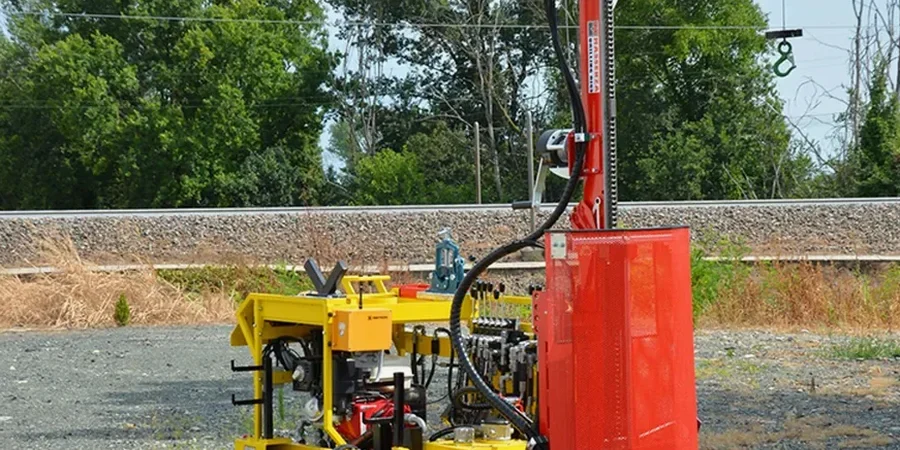
Rig accessTrack‑mounted CME‑55 or truck‑mounted Diedrich D‑50 for tight Irving lots

Common questions

How much does a single SPT boring cost on a typical Irving residential lot?

For a standard 30‑foot boring with split‑spoon sampling every 2.5 feet, full log, and a brief site visit, the cost typically falls between US$500 and US$810. Depth, access constraints, traffic control, and the number of companion lab tests can adjust the final figure, so we provide a fixed‑price proposal after reviewing the site address and foundation plan.

How deep does the SPT boring need to go for a two‑story slab‑on‑grade in Irving?

We generally drill to at least 25 feet below finished grade for a residential slab, and deeper if the blow counts suggest a compressible layer. The IBC requires exploration depth sufficient to characterize all soils that influence foundation performance, which in Irving’s alluvial setting often means penetrating the full active clay zone plus any underlying sand channel.

Can the SPT tell me if my Irving site has expansive clay?

The SPT itself measures penetration resistance, not swell potential, but the samples we recover during the boring are immediately bagged and tested for Atterberg limits. A plasticity index above 25 combined with low blow counts in the upper 10 feet is a strong indicator of highly expansive behavior, and we flag that directly on the boring log and in the foundation recommendations.

What does the N‑value correction mean on my boring log?

The raw blow count is affected by hammer energy, rod length, and overburden pressure. We apply the N60 correction for hammer efficiency and the CN overburden correction to get N1,60, which is the normalized value used for liquefaction triggering analysis and site class determination per ASCE 7. Both raw and corrected values appear on the final log so the structural engineer can trace the numbers.

How soon can you mobilize a drilling rig in Irving after the contract is signed?

Most residential and light commercial sites in Irving can be scheduled within five to seven business days. Larger projects requiring traffic control plans or utility potholing may need additional lead time, but we coordinate directly with the city’s right‑of‑way office to keep the schedule moving.

Location and service area

We serve projects in Irving and surrounding areas.

View larger map