GEOTECHNICAL ENGINEERING
IRVING
HomeLaboratoryLaboratory CBR test

Laboratory CBR Testing for Pavement Design in Irving, Texas

Site investigations you can build on.

LEARN MORE

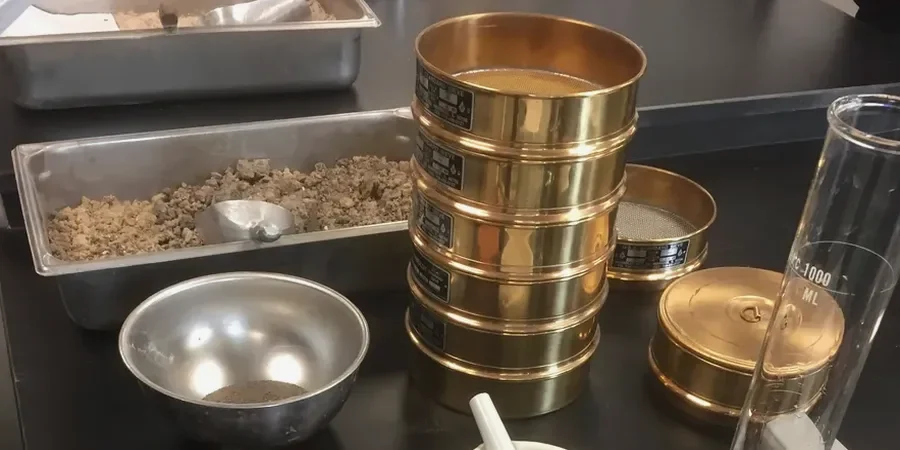
The soils beneath Irving change fast when you cross from the old terrace deposits near downtown toward the Trinity River floodplain. Over by Las Colinas, you might hit stiff, sandy clay that drains well; drive ten minutes south toward the floodplain and you are in fat clays that swell the moment they see water. That difference is why we run the grain-size analysis early—if the fines content jumps past 50 percent in a single block, the soaked CBR can drop from 15 down to 3 in a week. Our lab on the west side of the Metroplex runs the full ASTM D1883 procedure, compacting samples at optimum moisture and soaking them four days before the piston ever touches the surface. For Irving projects that sit on the Eagle Ford shale, we also pair CBR data with atterberg-limits to flag plasticity indices above 25, which almost always signal trouble for a flexible pavement section.

In expansive Irving clays, the four-day soaked CBR value often falls to less than half the unsoaked number—and that soaked value is what the pavement thickness design actually needs.
Our service areas

Process and scope

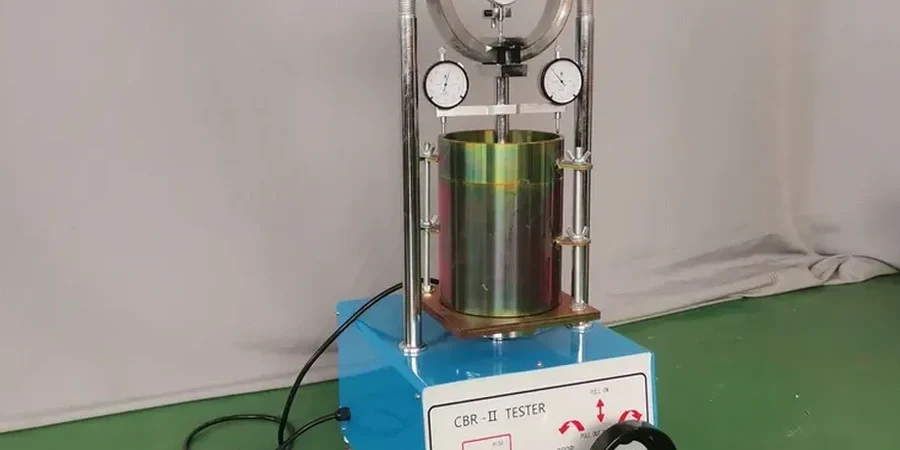
Irving sits at roughly 480 feet above sea level, and the 2020 census counted over 256,000 people—making it one of the denser suburbs in Dallas County. That growth keeps our lab busy. A standard laboratory CBR run here is not just one number; we report the soaked value at 0.1-inch and 0.2-inch penetration, the swelling percentage during the four-day soak, and the moisture-density relationship from the modified Proctor that feeds the compaction target. On a recent SH 183 widening project, the design called for a soaked CBR of 8 at the subgrade level. Initial samples from three Irving borings ran 4 to 6. The fix was a 12-inch lime-stabilized layer, and the re-test after curing came back at 22. That sequence—test, treat, confirm—is standard practice across the Metroplex, and the lab turnaround of five to seven working days keeps the earthwork crew from waiting on paper.
Laboratory CBR Testing for Pavement Design in Irving, Texas
Technical reference — Irving

Site-specific factors

In Irving, the biggest thing we see go wrong is a design team relying on an unsoaked CBR value for a subgrade that will sit under a pavement for thirty years. The first big rain after construction saturates the base, and suddenly the support is half what the design assumed. We have pulled cores on parking lots near LBJ Freeway where alligator cracking appeared within eighteen months; the lab re-test on the subgrade clay showed a soaked CBR of 2.5, but the original report had used an unsoaked 11. Another risk is taking one borehole as representative of a whole site. A single Irving lot can have sandy terrace deposits on the west half and fat floodplain clay on the east half. Running just one composite sample masks that variability. We recommend a minimum of three CBR specimens per distinct soil unit, and if the plasticity index varies by more than 10 across the site, treat them as separate design zones.

Need a geotechnical assessment?

Reply within 24h.

Email: [email protected]

Reference standards

ASTM D1883-21: Standard Test Method for California Bearing Ratio (CBR) of Laboratory-Compacted Soils, ASTM D1557-12(2021): Standard Test Methods for Laboratory Compaction Characteristics of Soil Using Modified Effort, TXDOT Tex-120-E: Soil-CBR, Laboratory

Technical parameters

ParameterTypical value
Standard methodASTM D1883-21
Compactive effortModified Proctor (ASTM D1557)
Soaking period96 hours (4 days)
Surcharge weight during soakEquivalent to overlying pavement mass
Penetration rate0.05 in/min
Reported CBR valuesAt 0.1 in and 0.2 in penetration
Swelling measurementRecorded daily during soak phase
Typical specimen count3 points per moisture-density curve

Common questions

What does a laboratory CBR test cost in Irving?

A single-point CBR test, including the modified Proctor compaction curve and the four-day soak, runs between US$120 and US$200 per specimen. Most Irving projects need at least three specimens to define the CBR-moisture relationship, so a full data set typically falls in the US$360 to US$600 range.

How long does a soaked CBR test take from sample to report?

Plan on seven to ten working days. The compaction and setup take one day, the four-day soak is fixed by ASTM D1883, and we need another one to two days for the penetration test, data reduction, and reporting. We can expedite preliminary unsoaked numbers in about three days if the schedule is tight, but the soaked value is what governs the pavement design.

Do Irving subgrades always require a soaked CBR, or can we use the unsoaked value?

For any permanent pavement in Irving, you need the soaked CBR. The expansive clays in Dallas County can lose more than half their strength when saturated. Using an unsoaked value almost always under-designs the pavement thickness and leads to early rutting or fatigue cracking. The only time unsoaked numbers are acceptable is for temporary construction platforms that will be removed before the permanent section goes in.

Location and service area

We serve projects in Irving and surrounding areas.

View larger map