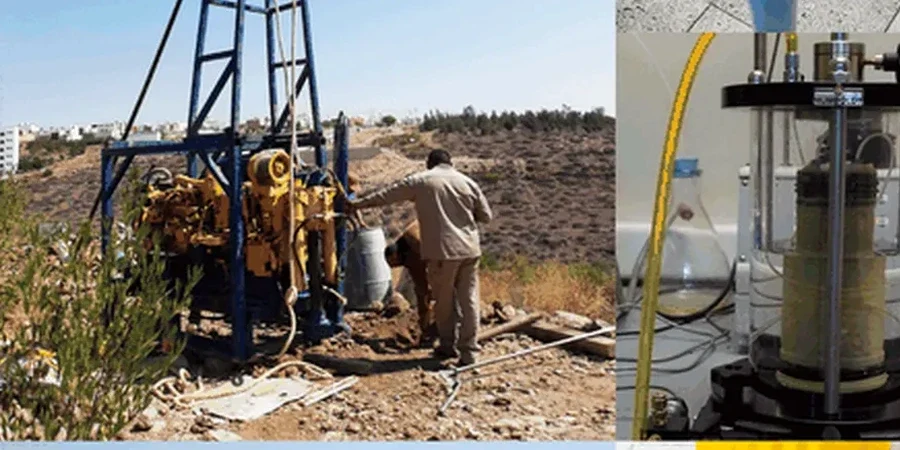
More than once we've seen a project team in Irving assume the Eagle Ford Shale is uniform and shallow, only to hit a deep paleochannel or an undocumented fault scarp during excavation. That assumption can add weeks to a schedule and tens of thousands in change orders. The Dallas County subsurface, particularly where the Woodbine Formation transitions toward the Balcones Fault Zone, is anything but predictable. Seismic tomography (refraction/reflection) cuts through that guesswork by building a continuous 2D or 3D velocity model from the surface, letting us map bedrock topography, identify low-velocity zones, and flag karst-like features in the Austin Chalk before a single bucket bites the dirt. For sites where conventional borings miss lateral heterogeneity, combining our seismic surveys with targeted sondaje SPT gives you both the geophysical signature and the physical sample to calibrate it—because interpreting a velocity anomaly without a ground-truth boring is just educated guessing.
A single Irving borehole tells you what's at one point; a seismic tomography line tells you what's happening across 200 feet—and what you're about to excavate into.