GEOTECHNICAL ENGINEERING
IRVING
HomeFoundationsPile foundation design

Pile Foundation Design in Irving, TX: Load Capacity & Deep Foundation Solutions

Site investigations you can build on.

LEARN MORE

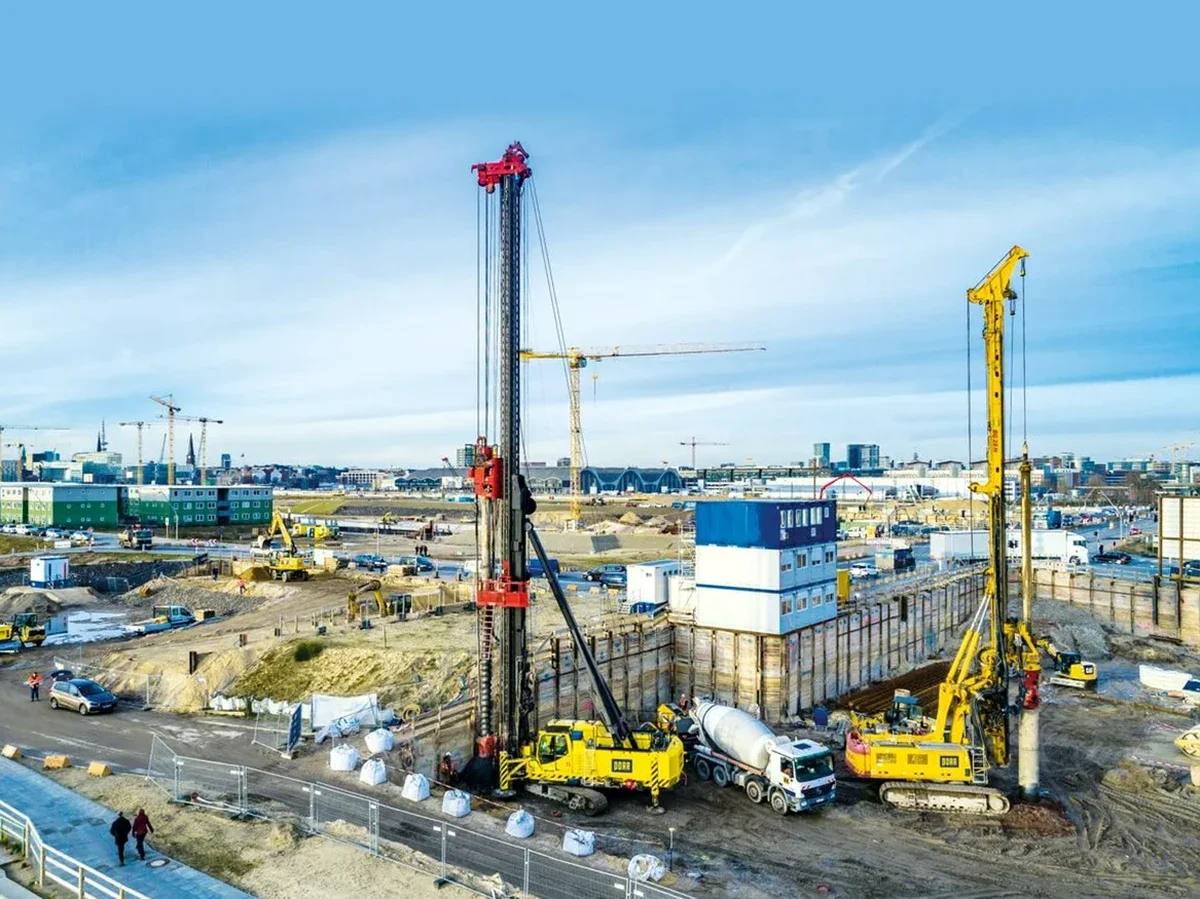
Irving sits at an elevation of about 482 feet, but the subsurface is far from uniform. Much of the city rests on the Woodbine Formation and expansive clay soils that shift with seasonal moisture variation. When a developer plans a mid-rise along the Las Colinas Urban Center corridor, shallow footings alone rarely meet the settlement criteria. We design pile foundation systems that transfer structural loads to competent bearing strata, bypassing the reactive upper soils. For sites near the Trinity River floodplain, we often integrate our design with a CPT test program to precisely map the depth to the Eagle Ford Shale, because traditional SPT data alone can underestimate the variability in these interbedded deposits.

In Irving's expansive Woodbine Formation, ignoring lateral soil movement in pile design can reduce service life by decades.
Our service areas

Process and scope

A costly mistake we see repeatedly is designing piles solely on presumed bearing values without verifying lateral capacity in the expansive clay. In Irving's climate, where summer temperatures average 96°F and winter rains saturate the topsoil, the shrink-swell potential can induce lateral forces that exceed typical design assumptions. Our pile foundation design accounts for this by calculating both skin friction and end-bearing resistance using site-specific parameters derived from laboratory triaxial tests. We model the pile-soil interaction under drained and undrained conditions, per the framework established by Poulos & Davis, to prevent long-term differential movement. For projects where deep excavation is required, we also coordinate with our deep excavation monitoring team to track wall deflection and groundwater drawdown during pile installation, ensuring the design assumptions hold true throughout construction.
Pile Foundation Design in Irving, TX: Load Capacity & Deep Foundation Solutions
Technical reference — Irving

Site-specific factors

A 10-story mixed-use building near Mandalay Canal was designed with a pile group that underestimated the downdrag forces from consolidating fill. The original geotechnical report, prepared without adequate laboratory consolidation tests, only considered end-bearing on shale. Within two years, the exterior cladding showed distress, and the settlement exceeded 1.5 inches. We stepped in to model the neutral plane location using a t-z analysis, a method refined from Seed & Reese's load-transfer approach, and designed a remediation with micropiles to arrest further movement. The lesson is clear: in Irving's variable geology, a pile foundation design must rigorously quantify negative skin friction, or the structural integrity is at risk.

Need a geotechnical assessment?

Reply within 24h.

Email: [email protected]

Reference standards

IBC 2024 (Chapter 18 Soils and Foundations), ASCE 7-22 (Minimum Design Loads), ASTM D1143 (Standard Test Methods for Deep Foundations Under Static Axial Compressive Load), FHWA GEC 10 (Drilled Shafts: Construction Procedures and LRFD Design Methods)

Technical parameters

ParameterTypical value
Design StandardIBC 2024 & ASCE 7-22
Pile Types AnalyzedDriven H-pile, Augered Cast-in-Place, Drilled Shaft
Typical Bearing Depth25 to 55 ft (Eagle Ford Shale)
Soil Unit Weight Range110 to 130 pcf (upper clay)
Undrained Shear Strength (Su)1,200 to 3,500 psf (stiff clay)
Swell Pressure Potential3,000 to 8,000 psf
LRFD Resistance Factor (Compression)0.55 to 0.70 (FHWA GEC 10)

Common questions

What is the typical cost for a pile foundation design package in Irving?

For a standard commercial project in Irving, a full pile foundation design package typically falls between US$1,540 and US$6,460. The final fee depends on the number of pile load tests, the complexity of the subsurface profile, and whether dynamic monitoring during installation is included.

How does the expansive clay in Irving affect pile design?

The high plasticity clay in the Woodbine Formation can exert significant uplift and lateral pressure. Our design includes a void form beneath grade beams and calculates the tension capacity of the pile to resist swell forces, ensuring the foundation remains stable through wet-dry cycles.

What pile diameter and length are common for projects in Las Colinas?

Most drilled shafts in Las Colinas range from 24 to 48 inches in diameter, with lengths between 30 and 60 feet to socket into the underlying Eagle Ford Shale. The exact geometry depends on the structural load and the required resistance to lateral spread.

Do you provide construction inspection for pile installation?

Yes, we provide full-time field observation and PDA testing during pile driving or augered cast-in-place installation. Our inspectors verify the pile tip elevation, record the blow count or grout volume, and document any anomalies for immediate engineering review.

Location and service area

We serve projects in Irving and surrounding areas.

View larger map