GEOTECHNICAL ENGINEERING
IRVING
HomeFoundationsShallow foundation design

Shallow Foundation Design in Irving, TX — Geotechnical Profiles That Work With Local Soils

Site investigations you can build on.

LEARN MORE

Irving sits squarely on the Eagle Ford Shale formation, where summer heat bakes surface clays into a brick-like crust and winter rains turn the subgrade into a sticky, swelling mass. That dramatic moisture swing is what trips up shallow foundation design when the geotechnical profile gets overlooked. We size footings and mat foundations using site-specific data from the Las Colinas urban corridor down to the older neighborhoods near Heritage Park — because a one-size-fits-all bearing pressure assumption will crack a slab faster than a drought cycle. Our approach ties IBC Chapter 18 bearing capacity checks directly to Atterberg limits and consolidation potential measured on samples pulled from the exact lot. When the soil survey flags soft lenses or fill, we bring in a plate load test to verify in-situ modulus before locking the foundation geometry, so the structural engineer gets numbers they can actually design to.

A shallow foundation in Irving lives or dies by the two feet of soil directly beneath it — get that profile wrong and the slab behaves like a boat on a swelling lake.
Our service areas

Process and scope

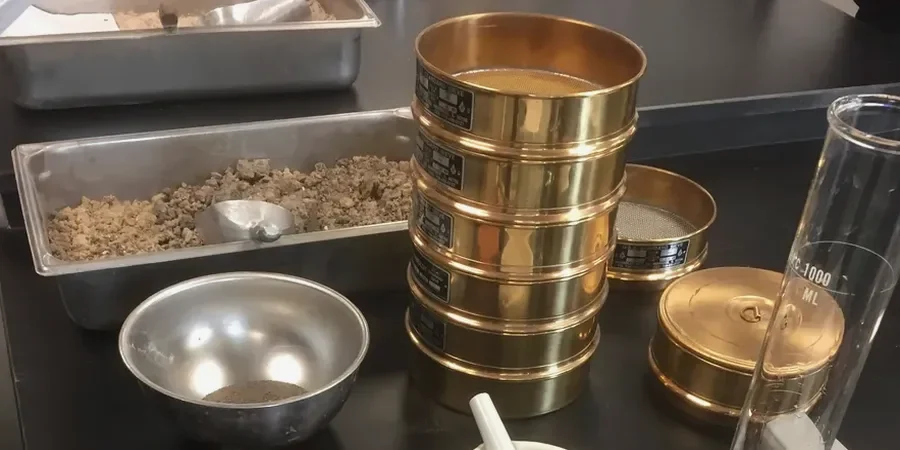
The first thing a local contractor notices when they dig in Irving is how fast the material changes across a single site — tan clay at two feet, gray fat clay at five, and maybe weathered shale at eight if you are lucky. That vertical variability is why our shallow foundation recommendations always pair a complete grain size curve with a plasticity index profile. Without it, you are guessing at the active zone depth for moisture fluctuation. We run the full Atterberg limits suite on every sampled stratum, correlate the liquid limit with the expansion index from ASTM D4829, and then back-calculate a recommended embedment depth that keeps the bearing surface below the worst of the seasonal shrink-swell. For commercial pads in the DFW metro where column loads climb above 200 kips, we often step the design from isolated footings up to a stiffened mat, using the modulus of subgrade reaction derived from a plate load test rather than a textbook table — because Irving clay does not read the textbook. A grain size analysis of the subgrade also tells us whether we need an imported select fill layer beneath the footing to cut off capillary rise, which is standard practice on sites east of Loop 12 where the natural moisture content runs high year-round.
Shallow Foundation Design in Irving, TX — Geotechnical Profiles That Work With Local Soils
Technical reference — Irving

Site-specific factors

We bring a truck-mounted drill rig to the site, push continuous-flight augers through the stiff upper crust, and pull Shelby tube samples from the depth range where the footing will actually sit. That is the only way to catch a thin layer of desiccated clay that crumbles under load once it rehydrates after construction. Skip that sampling step and you risk a differential settlement failure that shows up as diagonal cracks radiating from the corners of the slab within the first two wet seasons. Irving's building department is strict about foundation permit submittals — they will reject a geotechnical report that relies on generic county soil maps without a logged boring on the property. The bigger financial exposure, though, is the repair cost: underpinning a settled footing on an occupied structure runs far higher than the investigation budget, and your client will remember who signed off on a cheap report.

Need a geotechnical assessment?

Reply within 24h.

Email: [email protected]

Reference standards

IBC Chapter 18 (Soils and Foundations), ASCE 7-22 (Minimum Design Loads), ASTM D1586 (Standard Penetration Test), ASTM D2487 (Unified Soil Classification), ASTM D4318 (Atterberg Limits), ASTM D1196 (Plate Load Test)

Technical parameters

ParameterTypical value
Bearing capacity verification methodIBC Chapter 18 presumptive values + site-specific shear strength (ASTM D3080)
Expansive soil screeningAtterberg limits (ASTM D4318) with expansion index (ASTM D4829)
Typical embedment depth, residential24 to 36 inches below finished grade, adjusted per PI profile
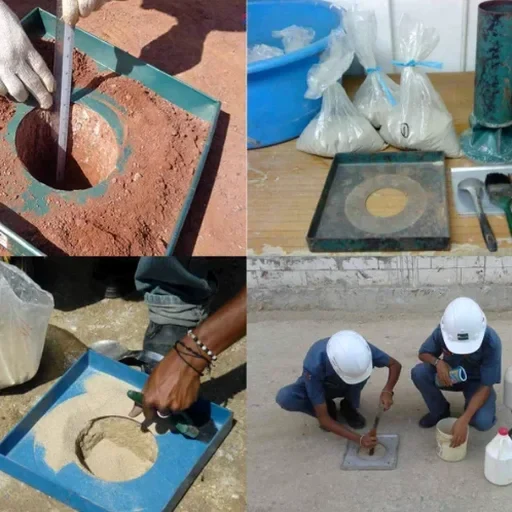
Subgrade modulus derivationPlate load test (ASTM D1196) on prepared subgrade or select fill
Fill material specification under footingsSelect fill, PI < 15, compacted to 95% of standard Proctor (ASTM D698)
Reinforcement guidancePer ACI 318, tied to expected differential settlement from consolidation test data

Common questions

What does a shallow foundation design package cost for a typical commercial lot in Irving?

For a single commercial structure on a standard lot in the Irving area, a complete shallow foundation design package — including one or two borings, lab testing for Atterberg limits and shear strength, and the final bearing capacity report — generally falls between US$1.900 and US$3.390. The spread depends on drilling depth needed to reach competent bearing material, how many lab tests the stratification requires, and whether a plate load test is added to verify subgrade modulus on fill-material sites.

How deep do footings need to be in Irving's expansive clay?

There is no fixed number for all of Irving because the active zone depth varies with the plasticity index of the specific clay on your lot. On a moderate-PI site near Campion Trail we might set embedment at 30 inches; a few blocks away where the Eagle Ford clay runs fatter the recommendation could push to 42 inches. The depth comes out of the lab data — we measure the liquid limit and expansion index on undisturbed samples and match those values to the moisture suction profile for North Texas. That is what the building official wants to see, not a generic rule of thumb.

Can you design a shallow foundation on a site with documented fill material?

Yes, but the approach changes. We log the fill thickness during drilling, sample both the fill and the native soil beneath it, and run consolidation tests if the fill layer is thick enough to compress under load. Often the recommendation involves overexcavating the fill to a specified depth, placing a compacted select-fill pad, and verifying the prepared subgrade with a plate load test before the structural engineer finalizes footing dimensions. The key is proving that the new bearing surface meets the assumed modulus, and the Irving permit review will expect that test data in the submittal package.

How long does the whole process take from site visit to final report?

For a straightforward commercial site in Irving, you can expect the field drilling and sampling to be completed in one day. Laboratory testing — Atterberg limits, grain size distribution, and direct shear — typically takes five to seven business days. The engineering analysis and report drafting add another three to four business days. So from mobilization to the signed report in your inbox, count on roughly two weeks, provided weather and lab scheduling cooperate. If the project is on a tight timeline we can often issue preliminary bearing capacity numbers within a few days of drilling while the full report is finalized.

Location and service area

We serve projects in Irving and surrounding areas.

View larger map