GEOTECHNICAL ENGINEERING
IRVING
HomeSlopes & WallsRetaining wall design

Retaining Wall Design for North Texas Soils in Irving

Site investigations you can build on.

LEARN MORE

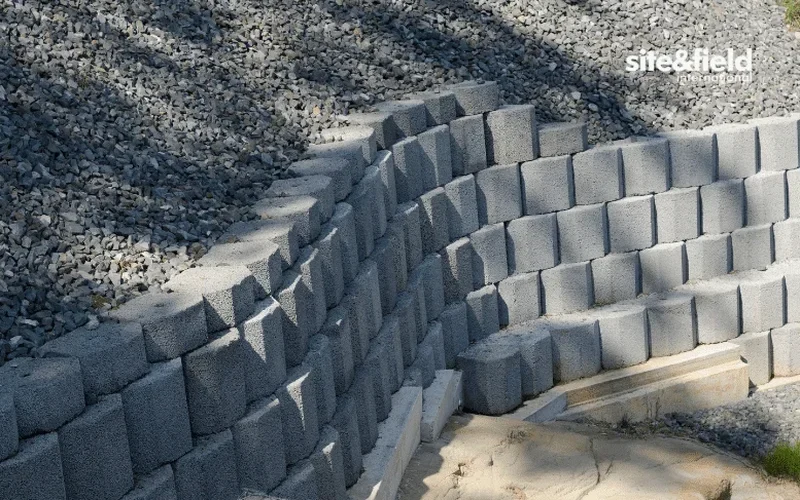
A mixed-use project along State Highway 114 in Irving stalled halfway through excavation when the contractor hit a pocket of fat clay that the preliminary report hadn't fully characterized. The planned cantilever wall suddenly needed re-evaluation. Irving sits squarely on the Eagle Ford and Woodbine formations—geologic units notorious for their shrink-swell behavior. A retaining wall design here cannot simply be copied from a Dallas County standard set; it has to account for the specific plasticity index and seasonal moisture variation we measure at the site. In our experience, combining a detailed Atterberg limits analysis with targeted test pits gives us the soil parameters that make the difference between a wall that moves and one that stays plumb for decades.

In Irving's expansive clay, a retaining wall without a working drain is just a temporary structure waiting for the next heavy rain.
Our service areas

Process and scope

The 2021 edition of the International Building Code (IBC) and ASCE 7-22 govern lateral earth pressure calculations in Irving. What makes the local application particularly demanding is the interplay between active pressure and the swelling pressure of desiccated clay. We typically design for at-rest or active conditions using drained strength parameters from the site investigation, but we also check the wall stem and heel for the secondary effects of soil volume change. This is where a rigorous grain size analysis becomes valuable: understanding the silt-clay fraction helps us predict the potential for both seasonal movement and drainage problems behind the wall. We incorporate global stability checks using limit equilibrium methods, referencing Spencer's procedure for non-circular slip surfaces when the backfill geometry is complex. Drainage design is not an afterthought—in Irving's clay, a poorly drained retaining wall becomes a bathtub that saturates the backfill and multiplies the lateral load.
Retaining Wall Design for North Texas Soils in Irving
Technical reference — Irving

Site-specific factors

The 2023 USGS National Seismic Hazard Model update placed parts of the Dallas-Fort Worth metroplex, including Irving, in a slightly elevated long-period hazard zone due to the deep Meers Fault in Oklahoma. While Irving is not Los Angeles, a retaining wall taller than six feet supporting a critical facility now warrants a pseudo-static seismic check under IBC Section 1803.5.12. The bigger day-to-day risk, however, is water. Irving receives over 37 inches of rain annually, often in intense spring storms. We have seen failures where a wall was perfectly stable on paper but the contractor skipped the chimney drain or used a non-perforated pipe. A saturated backfill behind an Irving wall can generate hydrostatic pressures exceeding the design lateral earth pressure by a factor of three. That is not a gradual deterioration—it is a sudden, dangerous failure.

Need a geotechnical assessment?

Reply within 24h.

Email: [email protected]

Reference standards

IBC 2021 (Section 1807: Retaining Walls), ASCE 7-22 (Minimum Design Loads), ASTM D2487 (Unified Soil Classification), ASTM D4318 (Atterberg Limits), FHWA NHI-06-089 (Soils and Foundations Vol. II)

Technical parameters

ParameterTypical value
Soil unit weight (γ)110 - 130 pcf (Eagle Ford clay)
Undrained shear strength (Su)800 - 2,500 psf
Effective friction angle (φ')18° - 28° (residual, PI > 25)
Plasticity Index (PI)25 - 45 (high expansion potential)
Active earth pressure coefficient (Ka)0.30 - 0.45 (drained, δ = ½φ')
Seismic coefficient (kh)0.05 - 0.10 (IBC site class D)
Backfill permeability (k)1x10⁻⁶ - 1x10⁻⁸ cm/s (native clay)

Common questions

What is the typical cost range for retaining wall design in Irving?

For a standard residential or light commercial retaining wall under 10 feet in height, the structural and geotechnical design phase typically ranges from US$1,050 to US$4,540 depending on the wall length, complexity of the soil profile, and whether a full global stability analysis is required by the City of Irving permitting office.

Does Irving require a geotechnical report for a retaining wall permit?

Yes. For walls over four feet in height, or any wall supporting a surcharge, the City of Irving building permit review requires a sealed geotechnical report that includes soil parameters, lateral earth pressure justification, and global stability calculations consistent with IBC Chapter 18.

How do you handle the expansive clay behind the wall?

We specify a backfill zone of low-plasticity select fill extending at least two feet behind the wall stem. The native high-PI clay is either removed and replaced or treated with lime. We also design a solid drainage system because controlling moisture is the primary defense against swelling pressure.

What is the difference between active and at-rest earth pressure in your designs?

Active pressure develops when the wall moves slightly away from the soil, reducing the lateral load. We use it for conventional cantilever walls that can tolerate minor rotation. At-rest pressure is higher and used when wall movement is restricted—for example, a basement wall tied to a rigid building frame, or an abutment wall. In Irving, we often default to at-rest conditions for tall walls on stiff clay where movement is uncertain.

Location and service area

We serve projects in Irving and surrounding areas.

View larger map