GEOTECHNICAL ENGINEERING
IRVING
HomeLaboratoryAtterberg limits

Atterberg Limits Testing in Irving TX: Practical Soil Classification for Earthwork

Site investigations you can build on.

LEARN MORE

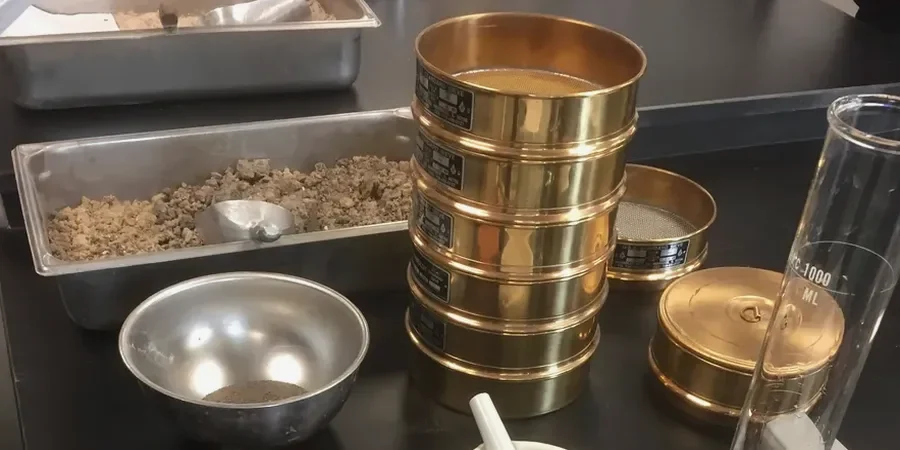
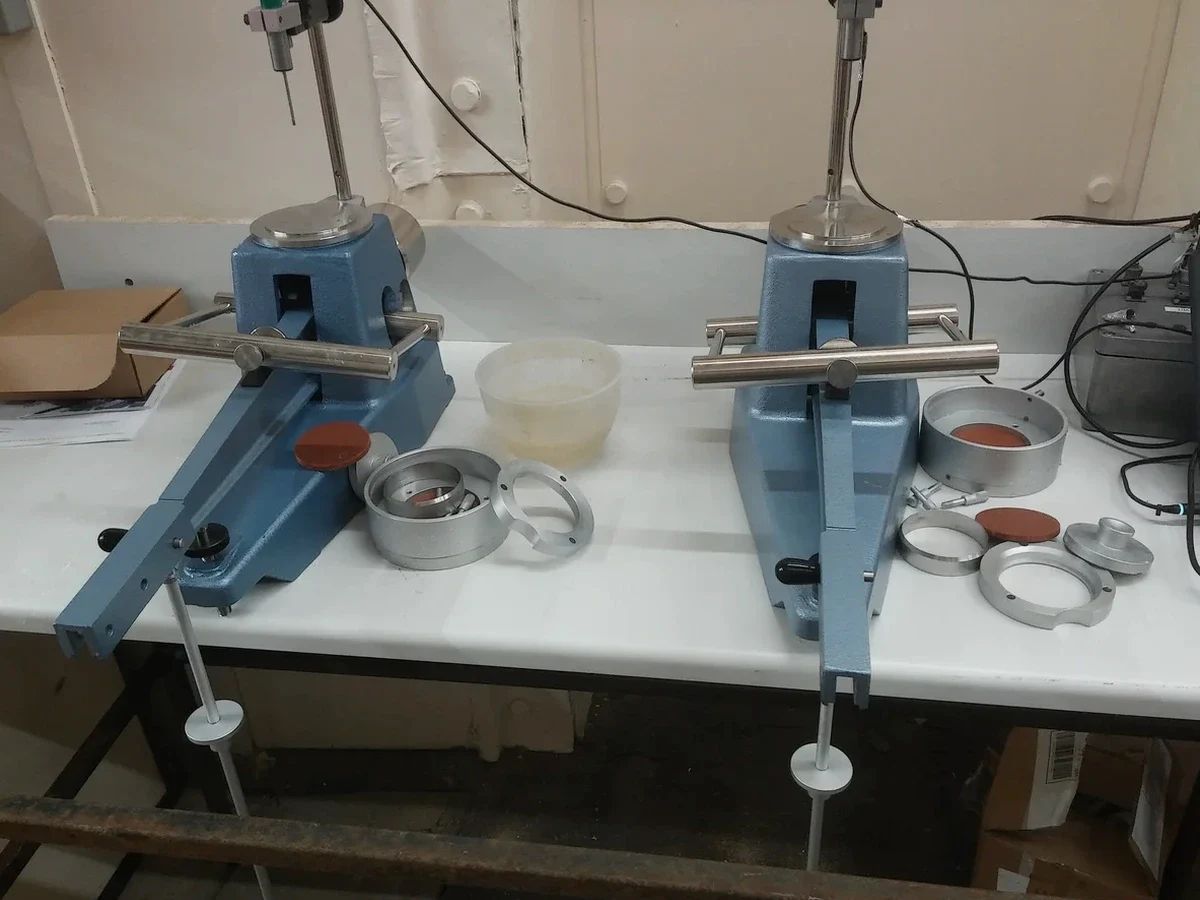
A Casagrande cup on a lab bench in Irving spins at exactly 120 drops per minute, cutting a groove through remolded soil until the two halves close over half an inch. That routine, governed by ASTM D4318, gives us the liquid limit, one of three numbers that form the Atterberg limits. We run these tests on samples pulled from depths between three and fifteen feet across the city, from the alluvial terraces near the Trinity River to the stiff residual clays underlying Las Colinas. The plastic limit comes from rolling 3 mm threads by hand; the plasticity index is simple subtraction. Together, the three values bracket the moisture range where Irving soils behave plastically. For any earthwork contractor dealing with the expansive Eagle Ford Shale or terrace deposits that lose strength after rain, these limits are not academic, they determine whether a fill lifts pass or fail. Many of our Irving projects combine Atterberg limits with a grain-size analysis to confirm the fines fraction driving the plasticity, especially when the Unified Soil Classification System letter symbol will appear on the geotechnical report cover sheet.

In Irving's Eagle Ford clays, a plasticity index above 25 signals high shrink-swell potential that no foundation engineer can ignore.
Our service areas

Process and scope

The International Building Code and ASCE 7 reference ASTM D2487 for soil classification, which relies directly on the Atterberg limits to assign group symbols like CL, CH, or MH. In North Texas, where the contact between the Woodbine Formation sands and the overlying Eagle Ford clays creates abrupt stratigraphic changes over short distances, a single boring can yield three different plasticity regimes within twelve vertical feet. We measure liquid limit on material passing the No. 40 sieve, using both the multipoint method when the budget allows and the one-point method for faster production. Plastic limit testing follows the hand-rolling procedure at a moisture content where the thread crumbles at 3.2 mm diameter. The plasticity index, subtracted from the liquid limit, places the soil on the Casagrande plasticity chart, which separates clays from silts and ranks expansion potential. For deep excavation support design in Irving's stiff clays, we often pair Atterberg data with triaxial testing to get drained strength parameters that the plasticity index alone cannot predict. Our laboratory reports include the liquidity index when the in-situ water content is available, giving the field state relative to the plastic range, a number that tells the contractor whether the cut floor will firm up during dry weather or stay slick for weeks.

Atterberg Limits Testing in Irving TX: Practical Soil Classification for Earthwork
Technical reference — Irving

Site-specific factors

Irving sits at the eastern edge of the Grand Prairie, where the climate swings from summer drought with 105-degree heat to spring storm seasons that can drop three inches of rain in six hours. A soil classified as CH with a liquid limit of 65 will heave during the dry months and turn to sticky muck when the thunderstorms arrive, causing pavement joints to open and shallow utilities to shift. Ignoring Atterberg limits on a commercial pad in Las Colinas means the structural fill may be sourced from a borrow pit with PI values exceeding 35, well above the 15 maximum that most Dallas County specifications allow for building pads. The liquidity index becomes critical during construction: a value near 1.0 means the natural ground is at its plastic limit and will remold into a greasy paste under scraper traffic. Our reports flag every sample with PI above 25 and recommend lime treatment quantities based on the reduction in plasticity that the Eades and Grim pH test confirms, a practical correlation developed from decades of Texas highway work on the same formations present in Irving.

Need a geotechnical assessment?

Reply within 24h.

Email: [email protected]

Watch the video

Reference standards

ASTM D4318-17e1: Standard Test Methods for Liquid Limit, Plastic Limit, and Plasticity Index of Soils, ASTM D2487-17: Standard Practice for Classification of Soils for Engineering Purposes (Unified Soil Classification System), IBC 2021 (adopted by City of Irving): Section 1803 foundation investigations, TxDOT Tex-105-E: Determining Plasticity Index of Soils

Technical parameters

ParameterTypical value
Liquid limit (LL)Water content at 25 blows (Casagrande cup) per ASTM D4318
Plastic limit (PL)Water content at 3.2 mm thread crumbling
Plasticity index (PI)PI = LL - PL
Liquidity index (LI)LI = (w_n - PL) / PI; field state indicator
Activity of clayPI / % clay fraction (<2 μm)
USCS group symbolCL, CH, MH, or ML based on PI and LL per ASTM D2487
Sample preparationWet or dry method; material passing No. 40 sieve

Common questions

What does Atterberg limits testing cost for a routine Irving project?

A full Atterberg limits suite (liquid limit, plastic limit, and plasticity index) on a single sample typically runs between US$60 and US$100 in the Dallas County market. The exact cost depends on sample condition, whether the multipoint or one-point method is requested, and how many points are needed for the liquid limit determination. Most Irving projects batch multiple samples, which reduces the per-unit price.

Why do Irving soils need Atterberg limits if we already have a grain size curve?

The grain size curve tells you the percentage of sand, silt, and clay, but it does not tell you how the fines behave with water. Two soils with identical clay fractions can have plasticity indices of 10 and 45, the first will behave like a silt with low shrink-swell, the second like a fat clay that heaves. The Atterberg limits place the soil on the Casagrande chart and assign the correct USCS group symbol, which the IBC and ASCE 7 reference for foundation design parameters.

How long does it take to get Atterberg results from the lab?

Standard turnaround for Atterberg limits in our Irving facility is three working days from sample receipt, assuming the material has already been air-dried and sieved. Expedited service can deliver results in 24 hours when the contractor is waiting on classification to release fill placement. The liquid limit test itself takes about two hours of bench time, including the four or five blow count points; the plastic limit adds another hour.

Location and service area

We serve projects in Irving and surrounding areas.

View larger map