GEOTECHNICAL ENGINEERING
IRVING
HomeSeismicSoil liquefaction analysis

Soil Liquefaction Analysis in Irving, Texas — Seismic Safety for Your Project

Site investigations you can build on.

LEARN MORE

Irving sits at an average elevation of about 482 feet, spread across the Trinity River floodplain and its terraces—a geography that directly shapes how the ground behaves during a seismic event. The city has experienced notable shaking from distant sources like the 2013 Mineral, Virginia earthquake and closer tremors linked to induced seismicity in the Fort Worth Basin. When you combine sandy alluvial deposits, a shallow water table in the Las Colinas area, and the potential for ground motion, the need for a rigorous soil liquefaction analysis in Irving becomes more than a permit requirement—it's a core engineering safeguard. Our team integrates decades of regional drilling data with ASTM D1586 SPT and CPTu correlations to quantify the factor of safety against liquefaction for your specific site, ensuring foundation designs that account for the real subsurface conditions beneath Irving.

In Irving's alluvial plains, a single undetected loose sand lens can reduce the soil's bearing capacity to near zero during even a moderate earthquake.
Our service areas

Process and scope

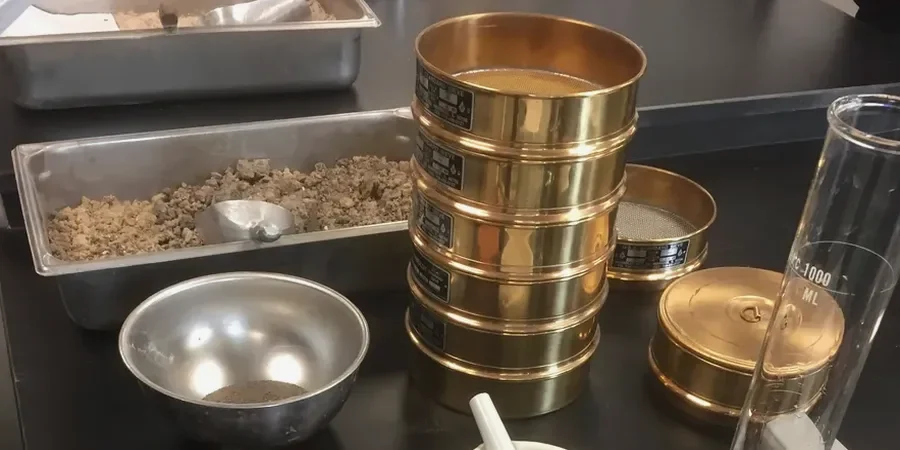
What we consistently observe across Irving job sites is the variability of the upper 30 feet. You might have stiff, overconsolidated clay in one portion of a lot, and just a few hundred feet away, a lens of loose silty sand in the Camp Wisdom or Woodbine formations that is highly susceptible to pore pressure buildup during cyclic loading. A standard soil liquefaction analysis in Irving must therefore go beyond a desktop study. We start with a review of the site's depositional history, then execute SPT borings using donut hammers calibrated for energy efficiency, applying Seed & Idriss simplified procedure adapted to the 2021 IBC seismic hazard maps. For sites where the critical layer is thin, we often pair the investigation with a CPT test to obtain a continuous resistance profile and avoid missing a low-qc seam that could govern the entire liquefaction assessment.
Soil Liquefaction Analysis in Irving, Texas — Seismic Safety for Your Project
Technical reference — Irving

Site-specific factors

The Trinity River corridor that cuts through Irving deposited extensive layers of point-bar and channel sands, many of which are now buried beneath commercial developments and residential subdivisions. These soils, with relative densities often below 40 percent in the upper 25 feet, present a classic liquefaction hazard when the groundwater table rises above the critical layer during wet years. A soil liquefaction analysis in Irving that ignores the seasonal fluctuation of the water table—sometimes by six feet or more between August and April—can severely overestimate the cyclic resistance ratio. We measure the groundwater level on the day of drilling and cross-reference it with USGS monitoring well data for the Woodbine aquifer to establish a conservative, design-level phreatic surface. Then we assess the potential for lateral spreading toward any nearby creeks or retention ponds, a failure mode that can wreck pile-supported structures if not modeled correctly.

Need a geotechnical assessment?

Reply within 24h.

Email: [email protected]

Reference standards

ASCE/SEI 7-22: Minimum Design Loads and Associated Criteria for Buildings and Other Structures, 2021 International Building Code (IBC), Chapter 18 — Soils and Foundations, ASTM D1586-18: Standard Test Method for Standard Penetration Test (SPT) and Split-Barrel Sampling of Soils, ASTM D6066-11: Standard Practice for Determining the Normalized Penetration Resistance of Sands for Evaluation of Liquefaction Potential

Technical parameters

ParameterTypical value
SPT N-value correction methodSeed et al. (1985) — ER calibration applied
Cyclic Stress Ratio (CSR) calculationSeed-Idriss simplified procedure, Mw 7.5 scaling
Cyclic Resistance Ratio (CRR) baseBoulanger & Idriss (2014) correlation
Fines content correctionFC ≤ 35% threshold, Ic-adjusted per CPTu when available
Factor of Safety targetFS ≥ 1.2 for IBC Risk Category II structures
Depth of investigationTop 50 ft, with focused sampling in 10-30 ft zone
Post-liquefaction settlementIshihara & Yoshimine (1992) volumetric strain method
Lateral spreading analysisYoud et al. (2002) empirical displacement model

Common questions

Is a soil liquefaction analysis required by the City of Irving for my building permit?

The City of Irving adopts the IBC with local amendments, which requires a geotechnical investigation per Section 1803. If the preliminary report identifies loose saturated sands within the top 50 feet and the site seismic design category is D or higher, a liquefaction analysis becomes mandatory. We prepare a report that specifically addresses the checklist items Irving's building officials look for: groundwater depth, SPT N-values, fines content, and a calculated factor of safety for each boring.

What soil types in Irving are most prone to liquefaction?

The clean to silty fine sands found in the alluvial deposits of the Trinity River and its tributaries are the primary concern. These are typically Holocene-age deposits, poorly graded (SP-SM per USCS), with low plasticity fines. We also watch for artificially placed fill sands in older developed areas, which can be loose and saturated if the post-construction drainage is poor.

How much does a soil liquefaction analysis cost for a typical Irving commercial lot?

For a standard commercial site in Irving, you can expect the liquefaction-specific portion of the geotechnical scope to range between US$2,330 and US$4,060. The final figure depends on the number of borings, whether CPTu is needed to resolve thin layers, and the laboratory testing program for Atterberg limits and sieve analysis on the critical samples.

Can you do the analysis if the Irving site already has old SPT data?

We can review legacy borings, but we often recommend supplementary testing. Older SPT data in Irving frequently lack hammer energy measurements (a requirement since ASTM D6066), which makes the N-values unreliable for modern liquefaction correlations. We will compare the old logs against our new calibrated borings and decide if the existing data can be corrected to a usable (N1)60 value.

What happens if my Irving site shows a high liquefaction potential?

If the analysis yields a factor of safety below 1.2, we outline ground improvement strategies in the geotechnical report. In Irving, common solutions include vibrocompaction for clean sands, stone columns to provide drainage and reinforcement, or deep soil mixing in silty zones. The choice depends on the depth and thickness of the liquefiable layer and the structural loads. We coordinate with your structural engineer to ensure the chosen mitigation aligns with the foundation type.

Location and service area

We serve projects in Irving and surrounding areas. More info.

View larger map