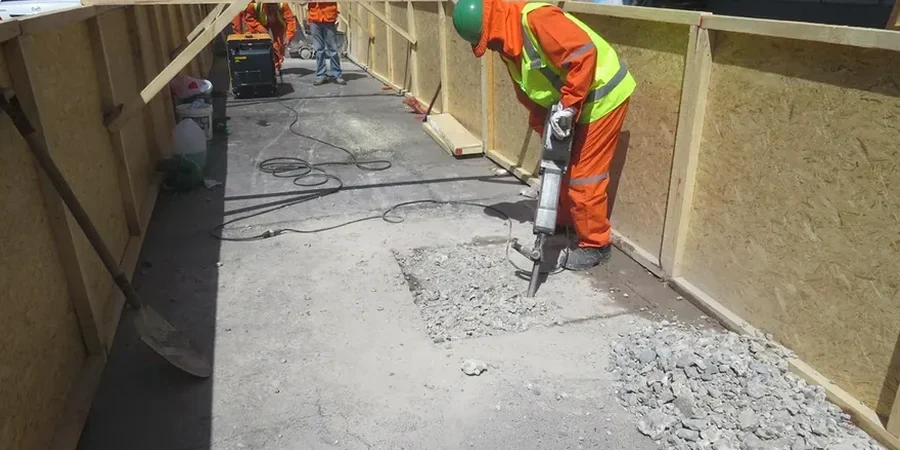
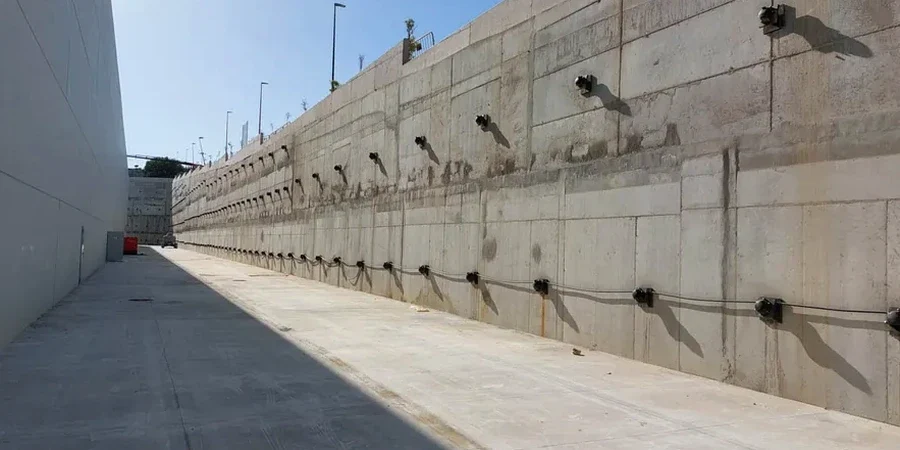
Irving sits squarely on the Eagle Ford Shale and Austin Chalk formations, a geological combination that creates real challenges for excavation support. When you open a cut deeper than 12 feet in these expansive soils, lateral earth pressures can shift dramatically between wet and dry seasons. ASCE 7-22 Section 3.2 requires that lateral earth pressure calculations account for unsaturated soil behavior, and the IBC 2021 references these provisions directly. We see too many projects where anchors designed for generic clay conditions fail to account for the shrink-swell potential of Irving’s weathered shale. The right active/passive anchor design starts with a detailed geotechnical profile that captures the transition zone between stiff over-consolidated clay and the underlying limestone bedrock, typically encountered between 15 and 30 feet below grade across central Irving. When combined with slope stability analysis for sites near the Elm Fork of the Trinity River, the anchor system can be optimized for both temporary excavation support and permanent retaining structures.
A properly designed active anchor system in Irving’s expansive Eagle Ford Shale can reduce required embedment depth by 30 percent compared to a cantilever wall, controlling both cost and construction risk.